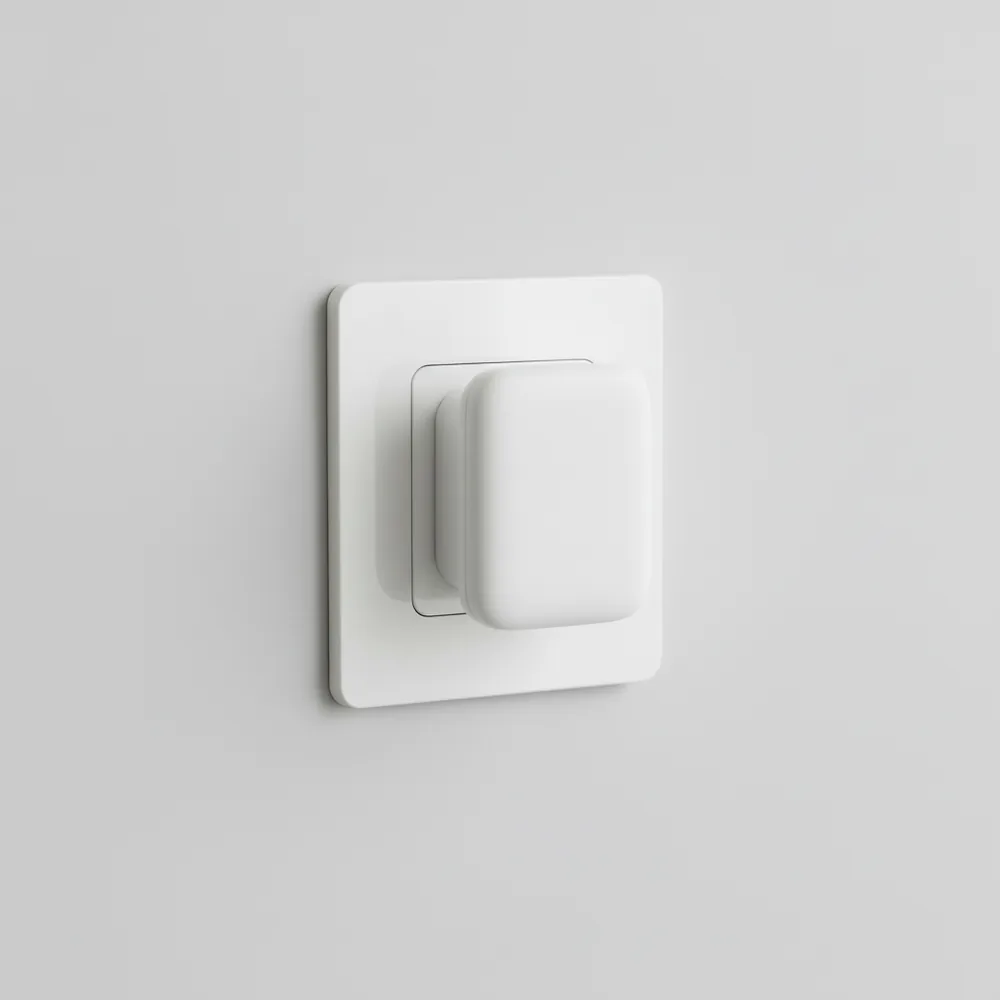
Plug-in outlet units, explained without the hype
You have probably scrolled past an ad for a little white box you plug into an outlet, promising to cut your electric bill in half. This guide is the opposite of that ad: a straight look at what these units are, what they genuinely do, and where the marketing goes too far.
The pitch you have probably seen
The loud version goes like this: plug it in, and your power bill drops by 40, 50, even 90 percent. That claim is why the whole category has a bad name — because it is not true. A small passive device in one socket does not change how many kilowatt-hours your home pulls from the grid, and no amount of confident copywriting makes it so.
We sell one of these units, and we would rather you buy it knowing exactly what it is than feel misled later. So here is the honest version.

What it actually is
Under the moulded shell is a sealed, solid-state assembly — no motor, no fan, no software. It leans against the brief voltage rises and dips an ordinary household circuit carries as appliances switch on and off through the day. Think of it as a small cushion on the line it shares, not a machine that does something dramatic.
It is fully passive. Once it is seated, a thin green band lights to show it is engaged, and that is the entire user interface. There is nothing to charge, pair, or schedule.
What it will not do
It will not lower your electricity bill. It is not an energy saver, it is not a surge-proofing miracle, and it is not a substitute for a licensed electrician or for fixing genuinely faulty wiring. If a listing tells you otherwise, close the tab.
At a glance
- Size
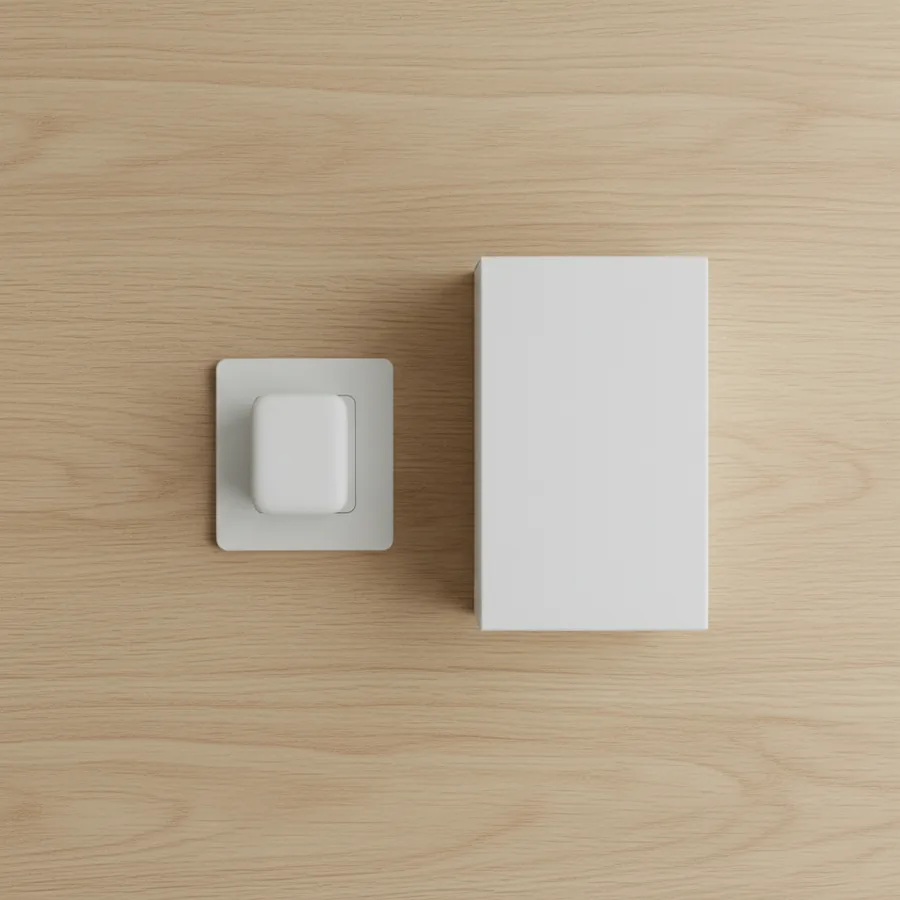
- About 56 × 96 mm, close to an outlet faceplate
- Plug
- Standard US two-prong, 120 V circuits
- Indicator
- Green band that lights while engaged
- Operation
- Fully passive; nothing to maintain
- In the box
- The unit and a printed quick-start card
Setting one up
There is not much to it. Pick a free outlet somewhere reasonably central, push the unit in until it sits flush against the plate, and check that the green band has come on. That is the whole routine — about thirty seconds, no tools, no wiring, no appointment.
Who it suits — and who it does not
A reasonable pick if you
- Want a small, silent, passive thing in the wall
- Like that it leaves the second socket free
- Value a simple 60-day return if it is not for you
Skip it if you
- Expect a lower electricity bill — it will not deliver that
- Need real surge protection for sensitive gear
- Have wiring problems that need an electrician
How we would sum it up
It is a modest, honest little accessory: quiet, cool, tidy, and genuinely no-fuss to live with — as long as you are not buying it for savings it cannot produce. If that is what you are after, here it is, at a fair price and with a real returns window.